
Views: 0 Author: Site Editor Publish Time: 2026-09-10 Origin: Site
Transitioning from off-the-shelf white-label products to fully custom formulas represents a high-stakes supply chain decision. You will face higher minimum order quantities. You must navigate extended lead times. You will encounter complex compliance variables. Many B2B buyers over-invest in customization too early. Others under-invest during peak seasonal scaling periods. These timing errors directly lead to eroded margins or missed brand-building opportunities.
You need an objective framework to determine exactly when your brand is ready to customize. We built this guide to help you make data-driven procurement choices. We will show you how to evaluate a partner based on empirical capabilities rather than marketing claims. This article delivers actionable steps for your supply chain journey. You will learn how to balance upfront capital expenditure against long-term retail requirements.
Customization is financially viable only when the projected margin increase offsets formulation, tooling, and stability-testing costs.
Off-the-shelf sets suit market validation; custom sets are required for brand differentiation, specific compliance needs, or targeted seasonal campaigns.
Evaluating a manufacturer requires moving beyond unit price to assess regulatory compliance, packaging compatibility, and supply chain redundancies.
Clear skincare gift set manufacturer specifications are the primary defense against scope creep and quality fade.
You must clearly define the objective behind your purchase. Rapid market entry demands a different approach than building long-term brand equity. Success depends on aligning your supply chain strategy directly to your current growth stage.
Standard catalog products offer immediate benefits for new brands. They require a low minimum order quantity (MOQ). You can deploy them rapidly. Factories have already completed stability testing for these formulas. However, this approach carries distinct disadvantages. You retain zero intellectual property (IP) ownership over the formula. You face a high risk of competitor overlap. Standard packaging options remain rigid and uninspiring.
Custom Original Equipment Manufacturing (OEM) or Original Design Manufacturing (ODM) unlocks complete control. You dictate the active ingredients. You own the proprietary packaging molds. You ensure precise brand alignment. The downside involves high capital expenditure (CapEx) for R&D. Furthermore, you must endure mandatory 12-week lead times purely for stability testing.
We recommend customization only under specific conditions. You should customize when historical sales data proves product-market fit. Customization also becomes necessary when strict retail compliance mandates unique formulations. Do not customize merely for aesthetics if your sales volume cannot support the initial tooling costs.
Manufacturing Strategy | Primary Advantages | Key Disadvantages | Best Suited For |
|---|---|---|---|
Off-the-Shelf (Private Label) | Low MOQ, fast launch, pre-tested stability | No IP ownership, high market overlap | Market validation, tight budgets, new startups |
Full Customization (OEM/ODM) | Unique IP, custom ingredients, exact branding | High tooling costs, 3-6 month lead times | Established brands, retail expansion, strict compliance |
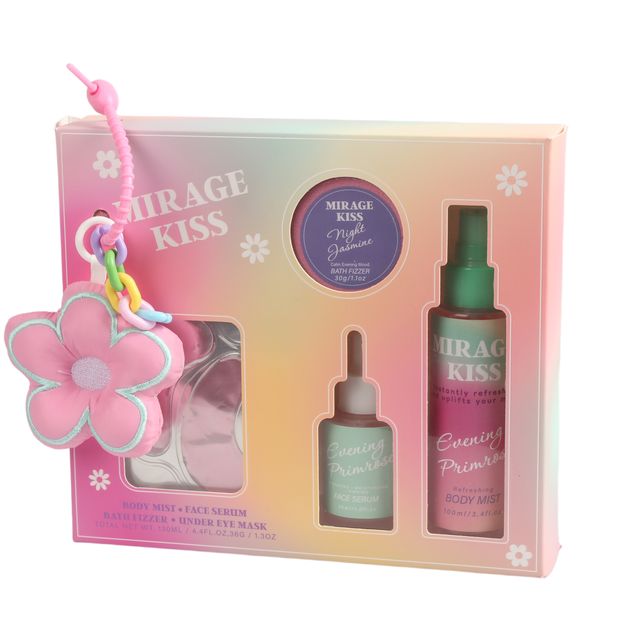
Timing your transition from catalog products to custom manufacturing dictates your profitability. Several strategic triggers indicate your brand is ready to take this step.
Moving from a direct-to-consumer (D2C) model to big-box retail changes everything. Retail buyers often mandate unique SKUs. They do this to prevent channel cannibalization. If a customer can buy your exact gift set at a competitor's store for less, the retailer loses leverage. Custom sets guarantee exclusivity for your major retail partners.
Q4 revenue often defines a brand's yearly success. Partnering early with a seasonal promotions skincare gift set manufacturer allows you to create limited-edition kitting. These Gift With Purchase (GWP) strategies drive higher Average Order Value (AOV). Custom seasonal packaging creates urgency. Consumers rush to buy limited runs, boosting your overall holiday conversion rates.
Modern consumers demand transparency. Your target audience might require strict verifiable claims. They look for Leaping Bunny certification. They demand EU-compliant or microplastic-free formulas. Standard catalog formulations rarely guarantee these stringent ethical standards. Custom manufacturing allows you to source certified raw materials. You can legally verify every claim on your packaging.
Initiate custom holiday discussions by March to ensure Q4 delivery.
Audit retail vendor guides before finalizing unique SKU components.
Request raw material traceability documents immediately during R&D.
Vetting a production partner goes far beyond negotiating the lowest unit price. You must evaluate their empirical capabilities. A reliable skincare gift set manufacturer will welcome rigorous audits.
Never accept self-certified claims. You must demand verifiable ISO 22716 (cGMP) documentation. Request their FDA or EMA registration numbers. Cross-reference these numbers directly on government databases. Certifications prove the facility follows strict sanitation, batch recording, and personnel training protocols.
A formula can perform perfectly in a lab but fail in consumer packaging. The manufacturer must demonstrate a strict protocol for testing formulation interaction. They must test the formula against the chosen plastics or glass. For example, Vitamin C degrades rapidly in clear glass. Opaque airless pumps prevent this degradation. Ensure your partner understands these chemical interactions.
A factory might handle a phase-one pilot run of 5,000 units perfectly. However, they might fail when you scale to 100,000 units. Assess their actual production line capacity. Ask them how they handle volume spikes. Unvetted third-party subcontracting is a major risk. Shady factories will outsource your large order to cheaper, uncertified facilities. You must prohibit unauthorized subcontracting in your contract.
Gift sets require complex secondary packaging. Evaluate whether the facility handles internal kitting and assembly. Some factories only fill the bottles. They then ship the components to a separate fulfillment center for assembly. This introduces severe transit risks. It also inflates your logistics costs. Internal assembly guarantees better quality control and faster turnaround times.
Relying on Alibaba badges instead of verifying third-party ISO audit reports.
Ignoring the factory's structural engineering capabilities for secondary gift boxes.
Failing to specify penalty clauses for delayed assembly timelines.
You cannot hold a factory accountable without a highly detailed contract. Clear skincare gift set manufacturer specifications serve as your primary defense against scope creep. They prevent quality fade over multiple production runs.
Never leave the formula up to interpretation. Document exact requirements. Define the target viscosity using specific centipoise (cP) ranges. Establish acceptable pH levels. Outline exact scent profiles using standardized fragrance notes. Most importantly, provide a strict blacklist of forbidden ingredients. Specify the exact active percentage thresholds required to support your marketing claims.
Secondary packaging impacts perceived brand value. Specify exact material grades. Require FSC-certified paperboard for eco-friendly claims. Demand specific Post-Consumer Recycled (PCR) plastic percentages. Establish structural integrity requirements for transit. The gift set must survive standard drop tests without internal components dislodging.
Establish transparent Acceptable Quality Limit (AQL) standards before production begins. Define exactly what constitutes a critical defect, a major defect, and a minor defect. A scratched bottle might be a minor defect for a budget brand. It is a major defect for a luxury brand. Agree on these parameters during the sampling phase.
Disputes over intellectual property routinely destroy brand-factory relationships. Clearly define who owns the custom formulation post-production. If you pay for the R&D, you should own the IP. Determine who owns the custom packaging molds. State explicitly how the factory must transfer these assets if you switch vendors.
Draft a detailed specification sheet covering all formula parameters.
Specify Pantone colors and material weights for all packaging.
Integrate AQL charts directly into your Master Service Agreement (MSA).
Include non-compete and IP transfer clauses in your contracts.
Custom manufacturing requires immense patience. Supply chain reality often clashes with aggressive marketing schedules. You must build realistic buffers into your launch calendar.
Custom formulations require mandatory microbiological testing. They also need accelerated stability testing. You cannot skip these steps. They ensure the product will not separate, change color, or grow dangerous bacteria on retail shelves. Budget a minimum of 8 to 12 weeks purely for R&D validation. Rushing this process guarantees recalls.
If you want a uniquely shaped bottle, you need a custom mold. Custom tooling for bottles or internal plastic trays adds 30 to 45 days to the timeline. Creating the mold is only step one. The factory must then produce samples, adjust tolerances, and run a test fill. Assume a 6-month minimum runway from signing the contract to final delivery.
Customs officials will seize shipments lacking proper documentation. Ensure your manufacturer provides comprehensive Safety Data Sheets (SDS). Demand a Certificate of Analysis (COA) for every single batch. These documents prove the formula matches the declared ingredients. They prevent retail rejection. Retailers will audit these documents rigorously before placing your product on their shelves.
Deciding to customize your product line demands rigorous preparation. You must rule out manufacturers unable to provide batch records. Eliminate any vendor who subcontracts primary filling. Shortlist two to three verified vendors for sample testing. Always conduct a facility audit, either in person or via a reputable third party.
Your immediate next step is to draft a comprehensive Request for Quotation (RFQ). Include your non-negotiable compliance requirements. State your target MOQs clearly. Outline your strict timeline constraints. Always request prototype samples. Test these prototypes thoroughly before you ever sign a Master Service Agreement (MSA). Proper vetting ensures your seasonal campaigns launch successfully and profitably.
A: The minimum order quantity usually ranges from 5,000 to 10,000 units. This depends heavily on your custom packaging requirements. Standard private label products only require 500 to 1,000 units. Custom molds and bespoke secondary packaging drive the higher volume requirements necessary for factory profitability.
A: You should use third-party auditors like SGS or Intertek for factory inspections. Ask them to verify ISO 22716 certificates directly with the issuing body. Always request documentation of previous export compliance. They must prove they successfully shipped goods to your specific target country.
A: Yes, the industry calls this "toll manufacturing." However, you assume all risks for compatibility and potential leakage. A reputable manufacturer will still mandate a strict compatibility test before filling your supplied components. They do this to protect their own production liability.


