Views: 0 Author: Site Editor Publish Time: 2026-09-09 Origin: Site
A hydrocolloid pimple patch is a small adhesive spot-care patch that uses moisture-responsive hydrocolloid material to interact with fluid available at the surface of a blemish while keeping the area physically covered.
It is best matched to surfaced blemishes where moisture is available for the material to interact with. A plain hydrocolloid patch does not reach deep acne, dissolve blackheads, or automatically provide an acne-drug effect. Choosing the right patch starts with matching the format to the blemish and then comparing fit, adhesion, size, wear directions, and any added ingredients.
The term hydrocolloid pimple patch describes one of the most common spot-patch formats in modern skincare. It adapts moisture-responsive hydrocolloid technology into a small adhesive patch that can cover an individual blemish.
The concept is simple, but the category is often oversold. A hydrocolloid acne patch is not a miniature vacuum that reaches down into a pore. Its useful role is much more specific: it can interact with moisture at the skin surface while creating a physical barrier that reduces touching and friction. That narrow mechanism explains both where the format works well and where it does not.
Hydrocolloid is a broad term for water-responsive polymer materials that can swell or form a gel when they interact with moisture. Hydrocolloid technology has a long history in dressing applications, and skincare patches use the same basic material behavior in a much smaller format.
In a plain pimple patch, that means the working material can take up some moisture available at the surface of a blemish. As it hydrates, the patch may become more opaque or cloudy. That visible change is a property of the material swelling with moisture; it should not be interpreted as proof that the patch has pulled “toxins” or material from deep inside the skin.
Surface moisture can be taken up by the material, changing its appearance and texture during wear.
A patch creates a physical layer between the blemish and fingers, rubbing, makeup, or routine contact.
Hydrocolloid patches are spot-care tools rather than whole-face acne-care products.
For a deeper explanation of the absorption and whitening mechanism, see our guide to how pimple patches work. This article stays focused on when a hydrocolloid patch is the right format and how to choose one.
A useful rule is to ask whether there is moisture available at or near the surface for the hydrocolloid to interact with. The more completely a blemish sits beneath intact skin, the less a plain surface patch can physically reach it.
| Blemish situation | Plain hydrocolloid fit | Why |
|---|---|---|
| Surfaced whitehead or pustule | Strongest fit | Moisture is close to the surface, and the patch can also discourage touching. |
| Closed red bump without a visible head | Limited moisture interaction | The patch may act as a physical cover, but there may be little surface moisture to absorb. |
| Blackhead or closed comedone | Limited | Plain hydrocolloid is not designed to dissolve or extract a compact plug inside the pore. |
| Deep, painful nodule-like bump | Poor match for the underlying problem | A surface patch cannot reach a deep inflammatory process beneath intact skin. |
| Broken or recently opened skin | Check the product label first | Do not assume every cosmetic pimple patch is intended for damaged or wounded skin simply because hydrocolloid is also used in wound-care products. |
Hydrocolloid is useful because its mechanism is narrow and predictable. The same narrow mechanism creates clear limitations.
If breakouts are repeatedly deep, painful, widespread, or leaving scars, adding more spot patches is not a substitute for appropriate acne evaluation. A board-certified dermatologist can help determine a more suitable treatment approach.
Not every patch marketed for blemishes is the same product type. Start by separating the physical hydrocolloid function from anything added on top of it.
The main story is moisture interaction, coverage, adhesion, size, thickness, visibility, and wear experience.
Some patch concepts include botanical extracts or other cosmetic ingredients. Their presence and claims should be verified for the specific finished SKU.
If a patch uses an OTC acne-drug active such as salicylic acid and is marketed to treat acne, the finished product needs to be developed within the applicable U.S. drug requirements rather than treated as a plain hydrocolloid cosmetic concept.
Dissolving microstructure or microneedle-style patches are another separate architecture. They use small soluble projections rather than relying only on a flat hydrocolloid sheet. They should be evaluated as a different delivery format rather than as a stronger version of an ordinary hydrocolloid patch.
Exact wear time and skin-use directions belong to the finished product, but the basic application logic is straightforward.
Remove makeup, sunscreen, oil, and skincare residue from the area where the patch will sit.
Clean, dry skin generally gives the adhesive a better surface to contact.
Center the blemish under the patch while leaving enough adhesive area around it for stable contact.
Use the finished product's instructions for wear time, replacement, skin condition, and removal.
Avoid putting moisturizer, facial oil, or another slippery leave-on product directly under the adhesive area unless the patch directions specifically allow it. Those products can reduce adhesion or change the intended contact between the patch and skin.
Once you have decided that hydrocolloid is the right format for the blemish, product differences become more practical than medical. Compare the patch as a physical product.
| Feature | Why it matters | What to compare |
|---|---|---|
| Size | A patch needs enough surrounding adhesive area to stay in contact. | Single size vs assorted diameters. |
| Thickness | Affects visibility, edge profile, handling, and perceived protection. | Ultra-thin daytime positioning vs more substantial patch formats. |
| Adhesion | Determines whether the patch remains flat during the intended wear period. | Edge lifting, contact, and removal experience. |
| Appearance | Important for daytime, makeup-adjacent, decorative, or gift-oriented concepts. | Clear, matte, colored, shaped, or printed designs. |
| Added ingredients | They can change the positioning and regulatory requirements of the finished product. | Read the actual product information rather than assuming all patches share the same ingredients. |
| Packaging | Influences protection, handling, portability, merchandising, and brand presentation. | Sheet layout, pouch, card, box, count, and assortment. |
Our current BL25019-HB shows how a hydrocolloid patch can be translated into a complete retail product rather than treated as material alone. The current product concept combines Hydrocolloid Technology with Natural Honey Extract and a multi-sheet paper-box presentation.
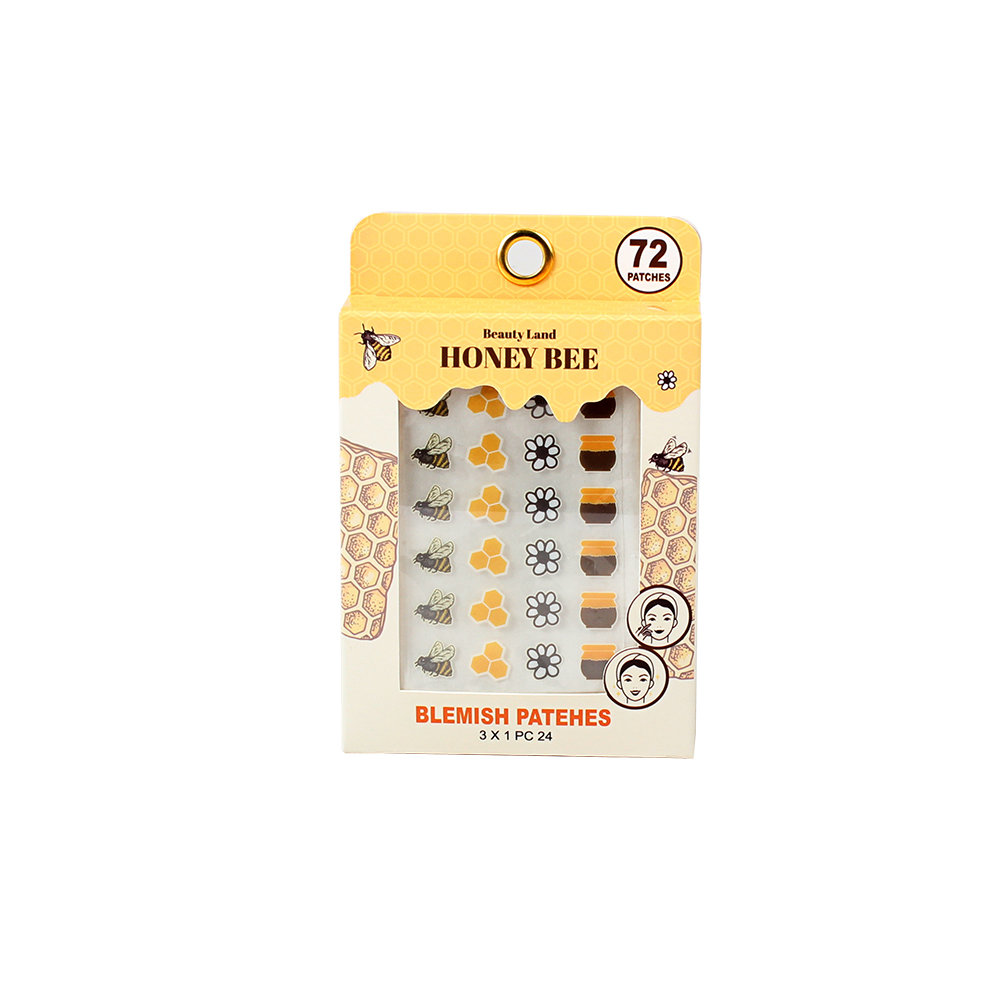
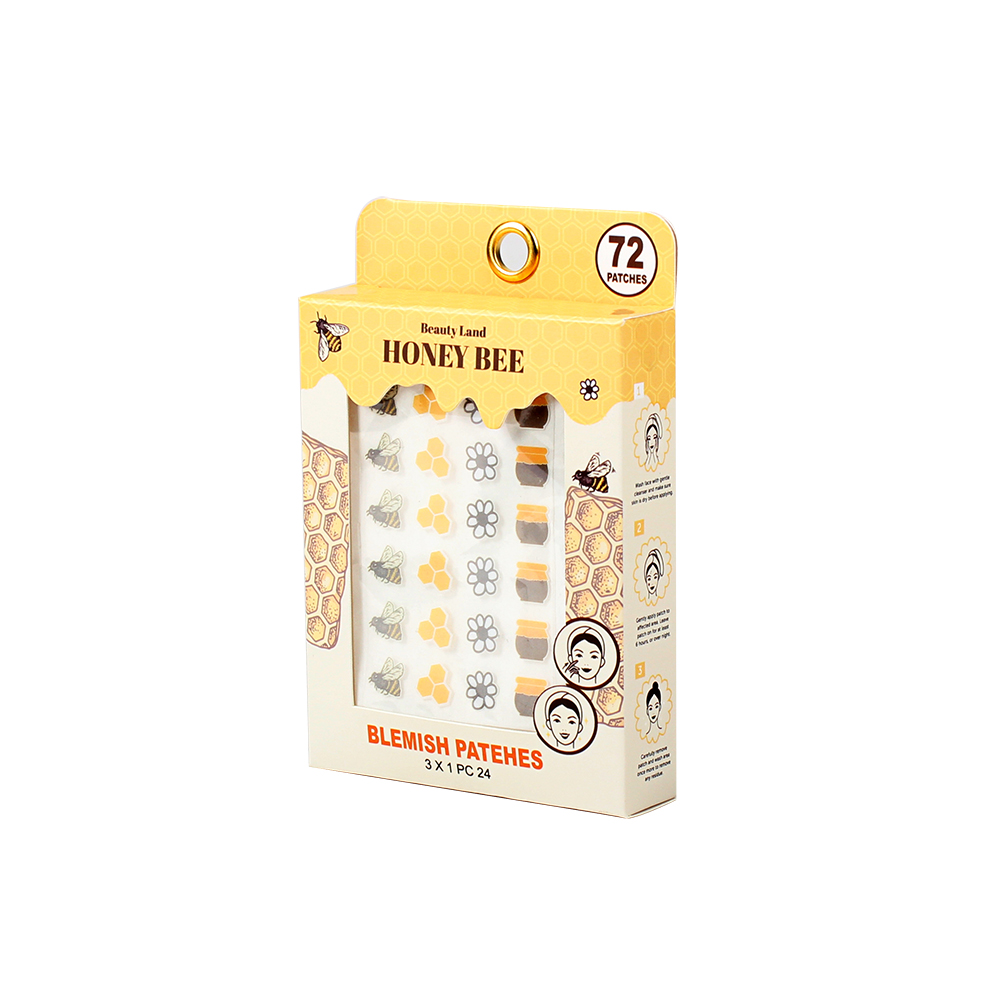
At BeautyShirley, we approach a hydrocolloid pimple patch as a complete product system. The consumer only sees a small sticker, but the finished experience depends on how material construction, absorbency, adhesion, patch dimensions, visual design, ingredients, sheet layout, packaging, directions, and claims work together.
Brands can review our current pimple patch range or use our OEM/ODM customization service to develop a concept around the intended material performance, patch format, packaging, and positioning.
It is an adhesive spot-care patch that uses moisture-responsive hydrocolloid material. The patch can interact with moisture at the surface of a blemish while physically covering the area.
A surfaced whitehead or pustule is generally the clearest match because moisture is available near the skin surface. A closed or deep bump provides much less for a plain hydrocolloid patch to interact with.
A plain surface patch cannot reach a deep cyst-like or nodule-like breakout beneath intact skin. It may provide physical coverage, but persistent deep or painful acne deserves a broader treatment discussion with a dermatologist.
Hydrocolloid becomes more opaque as the material takes up moisture and hydrates. The visible white or cloudy area is a material response, not proof that toxins or deep pore contents have been extracted.
Check the finished product label first. Hydrocolloid technology is also used in wound dressings, but that does not mean every cosmetic pimple patch is intended for broken or damaged skin.
Follow the directions for the specific product. Wear time varies by patch design, intended use, adhesion, and finished-product instructions, so there is no single number that applies to every hydrocolloid patch.
Not necessarily. Plain hydrocolloid does not require salicylic acid. Some products add other ingredients, so the label of the specific patch is the reliable place to check.
A classic hydrocolloid patch relies on a flat moisture-responsive material, while a dissolving microstructure patch uses small soluble projections as part of its working architecture. They are different formats and should not be treated as interchangeable versions of the same patch.
Compare intended use, absorbency target, adhesion, thickness, size assortment, visibility, optional ingredients, sheet layout, packaging, directions, and claims. At BeautyShirley, we treat those elements as one product-development brief.
A hydrocolloid pimple patch is best understood as a targeted moisture-management and physical-cover format. It is most naturally matched to blemishes that have reached the surface, where moisture is available for the hydrocolloid to interact with.
Its limitations are just as important as its strengths. Plain hydrocolloid does not reach deep acne, dissolve blackheads, prevent future breakouts, or automatically provide an acne-drug effect. The name tells you the patch technology; the finished formula and label tell you the actual product.
For consumers, choose the format that matches the blemish and follow the finished product directions. For brands, define the intended use first, then build the material performance, dimensions, adhesion, ingredient concept, packaging, and claims around that decision. That is how we approach hydrocolloid pimple patch development at BeautyShirley.