
Views: 0 Author: Site Editor Publish Time: 2026-09-07 Origin: Site
How do pimple patches work? Plain hydrocolloid patches interact with moisture at the surface of a blemish, swell as they take up fluid, and create a physical cover that helps reduce touching and friction.
They are most useful when a blemish has reached the surface and there is moisture for the hydrocolloid to interact with. They do not reach deep into the skin, “pull out toxins,” or replace appropriate acne treatment for persistent, painful, or deep breakouts.
Pimple patches look simple, but the best-known version—the hydrocolloid pimple patch—comes from a material class long used in wound dressings. In skincare, that material is adapted into a small adhesive patch designed to cover a localized spot and interact with moisture at the skin surface.
That distinction matters. A hydrocolloid acne patch is not a vacuum that reaches down into a pore. Its effect is mostly physical: it manages surface moisture, keeps the area covered, and makes it harder to pick at the spot. Understanding that mechanism explains both why pimple patches can be useful and why they have clear limits.
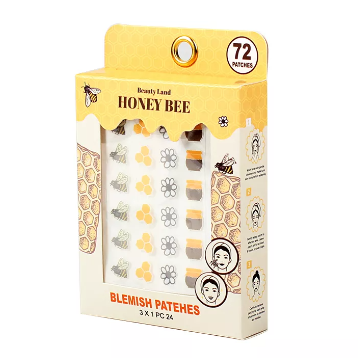
Hydrocolloid materials contain gel-forming components that interact with water. When a patch sits over a surfaced blemish that is releasing moisture, the hydrocolloid takes up some of that fluid and swells. At the same time, the outer part of the patch keeps the spot covered from fingers, rubbing, and routine contact.
This is why plain hydrocolloid patches tend to make the most sense on blemishes that have reached the surface. If there is little moisture at the surface, there is less for the hydrocolloid to absorb. The patch may still provide a useful physical barrier, but the visible “drawing out” effect is usually much smaller.
It does not pull material from deep beneath the skin, remove “toxins,” dissolve a blackhead plug, or automatically treat acne bacteria. Those are different mechanisms and, in some cases, different regulatory claims.
The white or cloudy area that appears on many hydrocolloid patches is usually the result of the material taking up moisture and changing as it swells. In other words, the patch is becoming more opaque as the gel-forming material hydrates.
That visual change should not be interpreted as proof that the patch has removed “dirt” or toxins from the skin. It is better understood as a moisture-response signal. How quickly a patch becomes opaque depends on the amount of surface moisture, the patch construction, fit, wear time, and other product-specific factors.
The useful question is not simply “Do pimple patches work?” but “Is this the kind of spot a surface hydrocolloid patch can actually interact with?”
| Blemish stage | How a plain hydrocolloid patch may help | Key limitation |
|---|---|---|
| Surfaced whitehead or pustule | This is the clearest fit: moisture is close to the surface, and the patch can also discourage touching. | Follow the specific product label, especially if the skin is broken or damaged. |
| Closed inflamed bump | The physical cover can reduce touching and friction. | There may be little surface moisture for the hydrocolloid to absorb. |
| Blackhead or closed comedone | A plain patch may provide coverage but is not designed to dissolve the plug. | The material sits inside the pore rather than as surface fluid. |
| Deep, painful nodule-like bump | A patch may keep fingers off the area. | A surface dressing cannot reach a deep inflammatory process. |
Small clinical studies have reported improvements in some inflammatory acne measures with hydrocolloid acne dressings, but the evidence base is still limited compared with established acne therapies. That makes it more accurate to describe plain hydrocolloid patches as localized spot-care tools with a physical moisture-management and covering function—not as a cure for acne.
If breakouts are repeatedly deep, painful, widespread, or leaving scars, a hydrocolloid patch should not be the only strategy. A board-certified dermatologist can evaluate whether a different acne-care approach is appropriate.
Application affects adhesion, and adhesion affects whether the patch can stay in place long enough to do its job. The exact wear time and skin-use directions should always come from the finished product label.
Remove makeup, oil, and skincare residue from the area where the patch will sit.
Hydrocolloid patches usually adhere best to clean, dry skin before moisturizer, facial oil, or makeup.
Place the patch over the target spot and press the edges down so the unit sits flat.
Remove or replace the patch when the product directions say to, or when adhesion has clearly failed.
Overnight wear is common in the category, but it is not a universal rule. Some patches are designed for shorter or longer wear windows. The label on the specific patch should determine whether it is intended for daytime, overnight, intact skin only, or another use condition.
A plain hydrocolloid patch and a patch marketed to treat acne are not automatically the same type of product. The hydrocolloid itself can be used as a physical spot-care material. Adding a recognized acne drug active—and making acne-treatment claims—can change the U.S. regulatory framework that applies to the finished product.
Typical communication focuses on moisture interaction, coverage, protection from touching, discreet wear, patch size, adhesion, and format.
Products marketed to treat acne with OTC actives such as salicylic acid or benzoyl peroxide must be evaluated against the applicable U.S. OTC acne-drug requirements, including Drug Facts labeling and permitted conditions of use.
This distinction is especially important for private-label brands. Ingredient choice, intended use, claims, directions, warnings, and label format need to be developed together. A skincare ingredient cannot simply be added to a hydrocolloid patch and then promoted with any desired acne claim.
From a product-development perspective, “hydrocolloid” is only the starting point. Two patches can use the same broad material category and still feel very different in real use. For brands, the practical performance questions usually sit across several variables rather than one headline material claim.
At BeautyShirley, we approach these variables as one product system rather than isolated specifications. That lets a brand define the intended user experience first—discreet daytime coverage, overnight spot care, assorted sizes, gift-ready presentation, or another concept—before finalizing the patch and package.
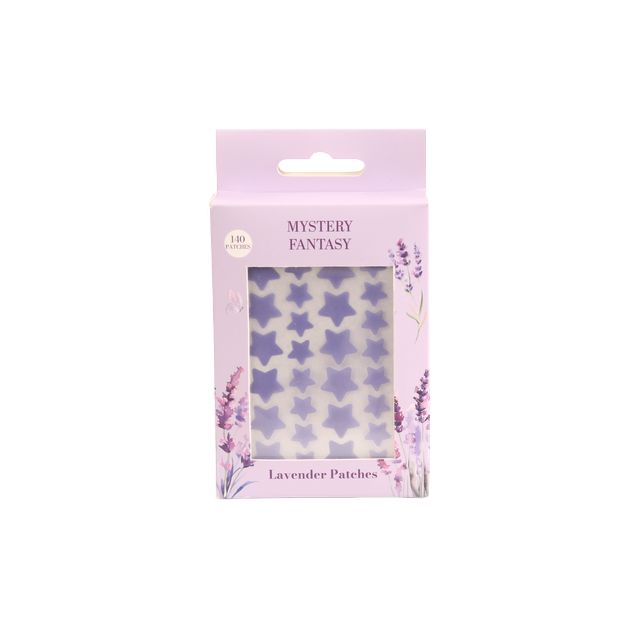
One current example in our range is the BLMF26004 lavender hydrocolloid patch set. We use it here as a format example—not as evidence that every pimple patch has the same formula, wear time, or performance.
The current set contains 5 sheets / 140 patches and uses assorted 8 mm, 10 mm, and 12 mm patch sizes. The pack is presented in a paper tray and paper box with a PVC window.
For private-label projects, patch size assortment, formula concept, sheet presentation, and packaging artwork can be discussed as part of the development brief. Final claims and directions should match the actual finished specification and target-market regulatory pathway.
View BLMF26004 →Brands comparing broader options can also review our pimple patch category or discuss a custom project through our OEM/ODM customization service.
Hydrocolloid patches are convenient for localized spot care, but they have a narrow mechanism. A deep, painful bump can sit below the level where a surface patch can meaningfully interact with it. Recurrent or widespread breakouts also call for a broader acne-care plan rather than repeated spot covering.
If acne is repeatedly painful, deep, or leaving scars, consider seeing a board-certified dermatologist. The goal is not to make a pimple patch sound ineffective; it is to match the tool to the problem it can realistically address.
Many hydrocolloid patches are designed for several hours of wear, so overnight use is common. The exact wear period depends on the finished product. Follow its directions rather than assuming every patch should stay on for the same number of hours.
A plain hydrocolloid patch has less surface moisture to interact with when a spot is still closed. It can still act as a cover and reduce touching, but the characteristic fluid-absorption effect is usually more limited.
Do not assume that every cosmetic pimple patch is intended for broken or wounded skin. Check the product label. If it says not to use on damaged skin, follow that direction even though hydrocolloid materials are also used in medical wound dressings.
Plain hydrocolloid is not designed to dissolve a blackhead plug. A patch may cover the area, but its moisture-absorbing mechanism is better matched to surfaced blemishes with moisture available at the skin surface.
A plain hydrocolloid patch cannot reach a deep cyst-like or nodule-like breakout beneath the skin. It may help discourage touching, but persistent deep or painful acne deserves a broader treatment discussion with a dermatologist.
Hydrocolloid becomes more opaque as it takes up moisture and swells. The white area is better understood as hydrated material—not as proof that toxins or dirt have been pulled from deep inside the skin.
Some thin patches are designed for discreet daytime wear. Apply the patch first to clean, completely dry skin so skincare or makeup does not interfere with adhesion. Whether makeup can be applied over the patch itself depends on the finished patch design and its directions.
Start with intended use and market positioning. From there, define whether the concept is a plain hydrocolloid cosmetic spot-care patch or an acne-treatment product, then align absorbency, adhesion, thickness, size assortment, optional ingredients, wear directions, packaging, and claims with that decision.
Pimple patches work best when their mechanism matches the blemish. Plain hydrocolloid interacts with moisture at the surface, becomes more opaque as it hydrates, and keeps the spot physically covered. That makes it useful for surfaced blemishes and for people who want a barrier against touching.
The same mechanism also explains the limits: hydrocolloid does not reach deep acne, dissolve blackhead plugs, or automatically provide an antibacterial or acne-treatment effect. Those claims require a different product design and, in the U.S., may also involve a different regulatory framework.
For brands, the strongest pimple patch brief starts with intended use, then works backward into material selection, size, adhesion, wear experience, packaging, and compliant claims. That is the approach we use when developing private-label skincare concepts with our customers.


