
Views: 0 Author: Site Editor Publish Time: 2026-09-22 Origin: Site
While generic corporate swag and standard retail singles are easy to source, they often fail. They rarely drive premium brand perception. They also struggle to increase your average order value (AOV). Today, the market shows a major shift toward wellness-oriented corporate gifting. Seasonal retail bundling is also more popular than ever. This transition has made personal care items highly strategic. Buyers want practical luxury rather than cheap promotional goods.
Upgrading to a custom product requires upfront capital. It also demands careful logistical planning. This guide breaks down exactly when the investment is justified. You will learn how to spec the product correctly. We will also show you how to evaluate manufacturing partners. This ensures you protect your margins while scaling. A premium bundle can elevate your entire product catalog.
Deciding to launch a custom product line requires precise timing. You must evaluate your market demand. Assessing your financial readiness is equally important. Knowing when to bundle products can dramatically shift your profitability.
Holiday purchasing behavior creates massive retail spikes. Consumers actively look for ready-to-gift solutions. You can capitalize on this by bundling single SKUs. These become premium gift sets kits. This strategy easily moves a shopper from a $15 single purchase to a $45 bundled transaction. It increases your AOV without requiring new customer acquisition. Shoppers perceive bundled sets as offering higher intrinsic value.
Best Practice: Align your launch timeline with Q4 holidays or Mother's Day. Start your production planning at least four months in advance. This avoids expensive rush fees.
Modern businesses are moving away from traditional promotional items. Cheap pens and standard mugs offer low utility. Instead, companies want to gift high-perceived-value personal care items. These items align closely with modern employee wellness trends. A beautifully packaged hand cream gift set shows genuine appreciation. It feels personal, luxurious, and thoughtful. HR departments and sales executives increasingly favor these wellness-focused gifts.
Releasing new product formulations carries inherent financial risk. Producing thousands of full-size units before testing demand is dangerous. Using smaller, multi-pack configurations solves this problem. You can test new scent profiles easily. You can introduce new ingredient formulations safely. If one specific scent dominates sales, you gain valuable data. You can then confidently commit to full-size standalone production later.
You must calculate your exact breakeven point. Do not assume higher retail prices guarantee better margins. You charge a premium for the "giftable" aesthetic. However, you must weigh this against added production costs. Custom secondary packaging costs money. Manual kitting adds labor expenses. If the premium outweighs these added costs, the project makes financial sense.
Common Mistake: Ignoring fulfillment labor costs during the pricing phase. Always factor assembly time into your final wholesale or retail price.
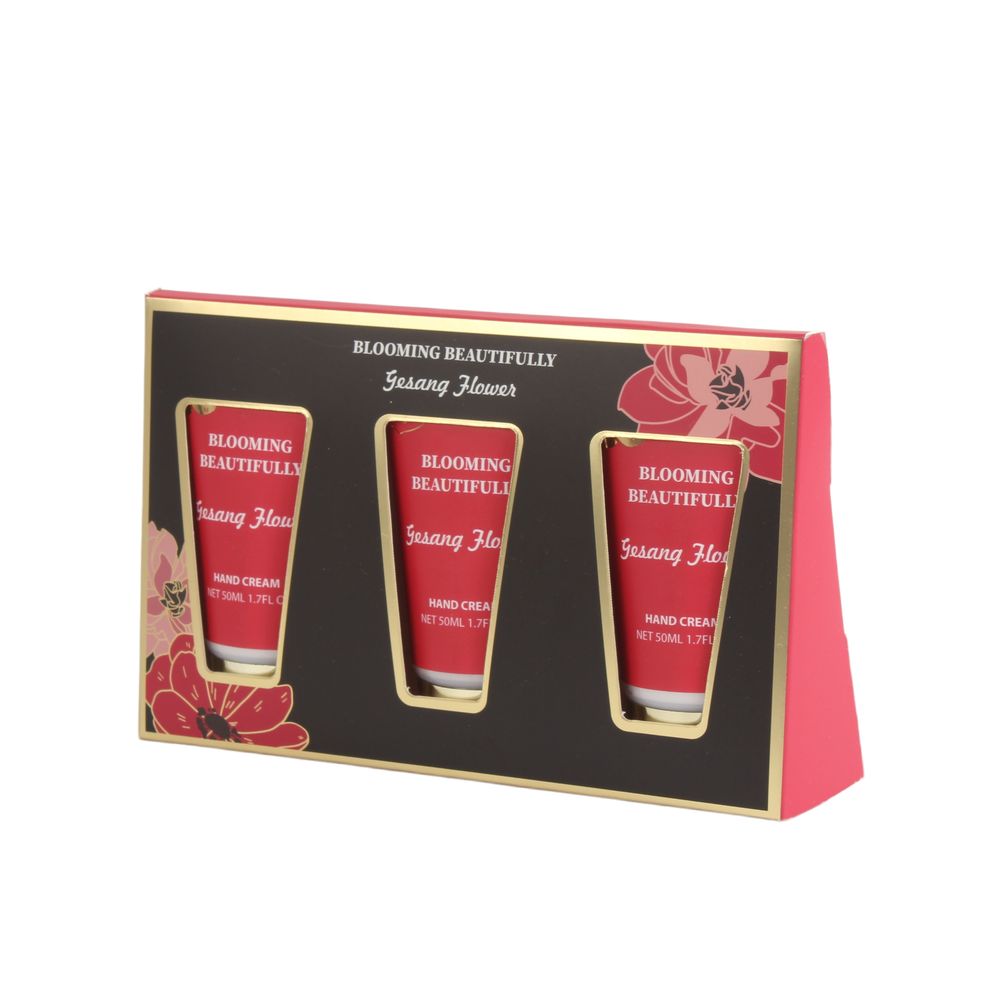
How you arrange your products dictates their retail success. Kit configuration influences everything from unboxing experience to shipping costs. You need a strategy that appeals to your specific buyer.
Configurations featuring multiple smaller tubes dominate the market. They offer unmatched variety. A highly sought-after layout is the hand cream gift set,blbf26004 3 50ml hand cream gift arrangement. This specific multi-tube setup solves a major buyer hesitation. It eliminates the risk of choosing the "wrong" scent. If a customer dislikes one fragrance, they still have others to enjoy. This significantly lowers the barrier to entry for new customers.
You do not have to limit bundles to just lotions. Bundling complementary items creates a holistic routine. Consider pairing your core product with cuticle oils. Luxury soaps are also excellent additions. Winter lip balms work perfectly for holiday sets. These pairings create a comprehensive hand-care experience. They position your brand as a complete lifestyle solution.
Different buyers require different packaging tiers. Mass corporate gifting campaigns need budget-friendly options. Entry-level mailer boxes work best here. They look professional but keep costs low. C-suite client appreciation demands something better. For these VIPs, use rigid boxes. Add a magnetic-closure for a luxury feel. Tiering your offerings allows you to capture multiple market segments.
Product quality defines your brand reputation. You must control every technical detail. Clearly defined hand cream gift set specifications prevent manufacturing errors. They ensure brand safety and elevate perceived value.
Modern consumers read ingredient labels carefully. You should specify clean or vegan formulations. Dermatologically tested labels add significant trust. Texture is just as important as the ingredients. Office workers need fast-absorbing formulas. No one wants greasy hands while typing. You must balance this fast absorption with high moisturization. Work closely with your chemist to achieve this delicate balance.
The tube itself communicates your brand identity. You have several material choices. Each carries specific pros and cons.
Primary Packaging Material Comparison
| Material Type | Key Advantages | Main Drawbacks | Best Use Case |
|---|---|---|---|
| Aluminum | Premium feel, highly eco-friendly, endlessly recyclable. | Prone to denting, can crack at folds over time. | Luxury brands, apothecaries, eco-conscious buyers. |
| PCR Plastics | Durable, excellent for travel, uses recycled materials. | Feels less premium than metal, varying recycle rates. | Mid-tier retail, everyday carry items, travel kits. |
| Laminates | Highly flexible, excellent barrier properties, cost-effective. | Often non-recyclable due to mixed material layers. | Budget-friendly sets, mass corporate gifting. |
Your outer box must achieve two things. It needs maximum visual impact. It also needs robust transit safety. A beautiful box is useless if products arrive damaged. Custom die-cut inserts prevent product shifting. You can use traditional EVA foam for a snug fit. Alternatively, sustainable molded pulp appeals to eco-conscious consumers. Both options protect the primary tubes during rough transit.
Cosmetics regulations are strict and vary globally. You must ensure your specifications meet regional laws. The FDA governs formulations in the US. The CPNP handles regulations in the EU. Your packaging must include proper labeling. Batch-code placement is mandatory. You must print these codes on both the primary tubes and the outer gift box. Failing to comply can result in expensive customs seizures.
Creating a beautiful product is only half the battle. Getting it assembled and shipped introduces new challenges. Hidden logistics costs can destroy your projected margins. You must anticipate these implementation realities.
Kitting is rarely automated. It requires intensive manual labor. Workers must assemble multiple tubes into specific slots. They often need to insert branded cards. Finally, they must securely seal the boxes. You must factor these labor hours into your unit cost. If your volume is high, consider hiring a specialized 3PL (Third-Party Logistics) provider.
No manufacturing process is perfect. You will experience material waste during assembly. Tubes might get scratched. Outer boxes might tear during folding. We call this supply chain shrinkage. Anticipate this by ordering appropriate overage. Usually, ordering 5% to 10% extra for custom boxes and inserts is a safe practice. This ensures you can fulfill your target unit count.
Common Mistake: Ordering exact quantities of boxes and tubes. When shrinkage occurs, you are left with unmatched components.
Shipping carriers charge based on size, not just weight. This is known as volumetric weight pricing. The dimensions of your gift box directly impact your shipping costs. An oversized box might look impressive on a shelf. However, it will trigger oversized shipping penalties. You need strategies to design compact packaging. The package should feel substantial but remain efficient to ship.
Your manufacturing partner holds the keys to your success. Choosing the wrong factory leads to delays and poor quality. You need a reliable hand cream gift set supplier to execute your vision.
You face a major sourcing decision. Will you use a turnkey private-label manufacturer? This partner handles formulation, tube filling, and box assembly all in-house. The alternative is fragmented sourcing. You buy tubes from one factory and boxes from another. You then ship them to a filler. Fragmented sourcing might seem cheaper initially. However, it carries much higher logistical risk. Turnkey solutions protect your margins by mitigating implementation errors.
Do not trust slick marketing brochures alone. You must vet potential partners rigorously. Follow these specific evaluation steps:
A good factory performs well during slow months. A great factory scales seamlessly during peak seasons. Assess the supplier's capacity carefully. Ask how they handle the Q3/Q4 holiday production rushes. They must scale volume without compromising batch quality. Clarify lead times before signing any contracts. Late holiday deliveries mean lost revenue and angry customers.
A custom personal care bundle is a high-impact strategy. It effectively elevates brand perception and drives bulk revenue. However, you must manage the unit economics tightly. Packaging logistics require careful oversight to protect your bottom line.
Your next steps should be action-oriented. First, define your target budget per unit. Second, finalize your preferred tube size and exact tube count. Finally, reach out to three shortlisted manufacturers. Request standardized quotes and formula samples. Comparing these physical samples will clarify your final sourcing decision.
A: Standard MOQs differ based on your formulation choice. If you use factory stock formulations, MOQs usually range from 1,000 to 2,000 units. If you require a fully custom formulation, expect MOQs between 3,000 and 5,000 units to cover raw material minimums.
A: Production timelines require careful planning. Expect 2-4 weeks for initial sampling and revisions. Once you approve the PPS, mass production takes 30-45 days. You must also add ocean or air freight transit time to your schedule.
A: Yes, most turnkey manufacturers accommodate custom fragrances. They perform a fragrance matching process. Be aware this adds extra testing for stability and skin sensitization. It typically extends your lead time by several weeks.
A: Eco-friendly molded pulp provides an excellent unboxing experience and strong sustainability claims. However, it requires a higher tooling cost. Traditional EVA foam is cheaper for lower volumes and offers supreme shock absorption during transit.


