
Views: 0 Author: Site Editor Publish Time: 2026-09-07 Origin: Site
Launching a bath or spa product line requires more than choosing a pleasant scent. You must carefully evaluate the physical specifications of your raw materials. These details dictate manufacturing viability, packaging requirements, and the final end-user experience. Selecting the wrong grain size or moisture profile causes significant issues during production. It easily leads to severe caking, embarrassing packaging failures, or poor dissolution rates in the tub. These physical failures directly impact your overall profitability and quickly erode consumer brand trust.
This guide breaks down how to align your specific project goals. Whether you plan for retail-ready gifting or bulk spa distribution, we cover the exact configurations you need. You will discover how to match physical material behaviors with the right vendor capabilities. Understanding these core mechanics ensures a smooth, highly successful product rollout.
The physical dimensions of the salt dictate aesthetic appeal on the retail shelf. They also determine the functional reality once dropped into warm water. Properly defining your bath salt specifications ensures a seamless customer experience. If grains appear too small, they resemble generic cooking ingredients. If they look too large, consumers fear drain blockages. You must strike a deliberate balance based on your intended application.
Formulators primarily use fine grains for blending with dry powder additives. They remain ideal for heavy body scrubs and fast-dissolving foot soaks. The high surface area allows them to melt almost instantly upon water contact. However, this format introduces a high implementation risk. Smaller particles are highly prone to clumping in humid environments. You require strict anti-caking agents like dendritic salt or tapioca starch to prevent solidification. Alternatively, manufacturers must use climate-controlled processing rooms to manage ambient moisture during filling.
Medium grain represents the industry standard for standard bath soaks. It fits perfectly into automated shaker-bottle packaging lines without jamming filling hoppers. The main advantage lies in its balance. It offers an attractive visual texture alongside an acceptable dissolve time. This format resists minor moisture ingress better than fine powders. It remains the safest default choice for new product lines entering the market.
Coarse grains excel in potpourri blending and clear jar presentations. High visual impact matters most for these specific retail items. They provide slow-release therapeutic soaks, dissolving gradually over a twenty-minute session. Yet, they carry distinct physical risks. Large, jagged grains can easily puncture or dent lightweight packaging during rough transit. The user must also agitate the bath water vigorously to dissolve them fully. Un-dissolved coarse crystals create an uncomfortable seating surface in the tub.
Table 1: Grain Size Application and Risk Matrix
| Grain Size | Diameter Range | Best Application | Primary Implementation Risk |
|---|---|---|---|
| Fine | 0.2mm - 1mm | Scrubs, fast-dissolving soaks | High clumping risk in humidity |
| Medium | 1mm - 3mm | Standard commercial soaks | Minimal risk; industry standard |
| Coarse | 3mm - 6mm+ | Visual displays, slow-release | Packaging damage, slow dissolve |
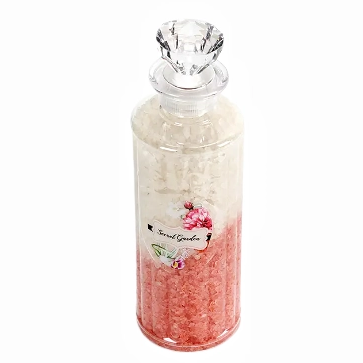
You must decide your end-goal formats early in the planning phase. Determine if the project requires raw bulk material for in-house manufacturing. Alternatively, you might prefer white-label or private-label finished goods. Changing your operational course mid-development disrupts timelines and burns capital unnecessarily.
Analyze trending market formats closely. Many modern wellness brands succeed by launching visually striking options directly to consumers. Opting for standard visual formats, such as a 600g double colors bath salt, commands immediate attention. This specific configuration offers instant shelf-appeal. It creates a perceived premium value highly suitable for boutique gifting and luxury retail environments. Consumers frequently purchase these products for their aesthetic charm before ever testing the scent.
However, layered or multi-colored configurations demand strict environmental controls. The manufacturing facility must remain entirely dry. If you ignore this protocol, dye bleeds between the colored layers during warehouse storage. A beautiful dual-color product quickly becomes a muddy, unappealing mixture. Your quality control team must ensure rigid moisture separation between colors.
Commercial spas operate on completely different purchasing logic. Buyers focus heavily on a low cost-per-ounce. They prioritize ease of scooping and rapid dispensing for working spa technicians. Spas rarely need complex visual layering or decorative jars. They need highly functional, therapeutic grade materials delivered in durable containers. Bulk configurations often utilize uncolored, unscented base materials packed in fifty-pound lined sacks. Spa workers then customize these pure bases on-site for individual client treatments.
How the final product behaves physically dictates repeat customer purchases. Consumers use these items in a high-humidity bath shower environment. You must bridge the technical gap between product design and real-world residential application. A formula might look completely stable in a dry laboratory. It can fail miserably in a steamy, poorly ventilated bathroom.
Adding essential oils or liquid fragrances fundamentally alters the baseline moisture content. Uncalibrated liquid ratios inevitably lead to a defect called "weeping." This happens when excess, unabsorbed oil pools at the bottom of the retail container. Poor formulation can also cause the entire batch to cure into a rock-hard block. Certain fragrances containing vanillin even discolor the crystals, turning them brown over time.
Standard operating procedures should always dictate a specific curing time. Allow volatile moisture to evaporate entirely before capping the jars. Many experienced formulators spread newly mixed batches on large drying racks for twenty-four to forty-eight hours. This simple step prevents trapped moisture from ruining the sealed product.
You must select packaging engineered specifically for moisture defense. Porous materials simply cannot protect hygroscopic salts.
Prioritizing raw cost over reliable quality guarantees future supply chain failures. Cost becomes entirely irrelevant if your vendor fails standard compliance checks. Product recalls destroy modern retail brands almost instantly. Strict quality consistency matters far more than minor raw material savings.
Demand updated Certificates of Analysis (COAs) for every single batch delivered. Never accept a generic, years-old document. Use these laboratory reports to verify the precise mineral content of your shipment. You must also screen for dangerous heavy metal contamination. High-quality vendors test routinely for arsenic, lead, and microbial limits. This documentation proves vital if regulatory agencies audit your finished goods.
A truly reliable bath salt supplier controls their own direct supply chain. Determine if they directly import Dead Sea, Epsom, or Himalayan materials. Do they rely heavily on unpredictable third-party brokers? Direct import control prevents out-of-stock bottlenecks during your critical peak sales seasons. It also ensures consistent visual coloration and grain geometry from batch to batch.
Assess their true operational ability to scale up production. They must handle a sudden jump from pilot run Minimum Order Quantities to full-pallet deliveries. A viral marketing campaign can drain your inventory literally overnight. Your vendor should manage massive truckload orders without causing exponential increases in manufacturing lead times. Ask explicitly about their maximum weekly tonnage capacity.
The pilot testing phase separates successful legacy brands from failed launches. Never scale a new formulation without conducting thorough, real-world stability testing. A pure bath salt base reacts uniquely to different botanical additives. What works perfectly for a dry lavender blend might fail completely for a wet citrus blend. Different essential oils carry vastly different viscosity levels and oxidation rates.
Sourcing the right material configurations requires careful, calculated alignment. You must balance visual marketing goals, strict packaging constraints, and unavoidable chemical realities. Formulating a premium product goes far beyond picking a trendy fragrance. It requires mastering grain behaviors and moisture management.
Prioritize finding a manufacturing vendor who acts as a genuine partner. They should offer highly transparent data on raw specifications. They must maintain robust, reliable supply chains. Avoid simply chasing the lowest raw material bid on the open market. Start your product journey with thorough sample testing. Validate your packaging seals, check accurate dissolve rates, and verify aesthetic appeal long before committing to a full production run.
A: Unscented, uncolored salts last indefinitely if kept dry. Once oils, colors, or botanicals are added, the effective shelf life typically drops to 6–12 months due to oil oxidation and moisture ingress.
A: Clumping is caused by hygroscopy (absorbing moisture from the air) or insufficient drying time after adding liquid fragrances. Upgrading the packaging seal or adding a natural anti-caking agent (like dendritic salt or tapioca starch) resolves this.
A: Yes, most established private label suppliers can reverse-engineer or custom-match specifications, though custom configurations usually require significantly higher Minimum Order Quantities compared to stock items.


