
Views: 0 Author: Site Editor Publish Time: 2026-09-03 Origin: Site
Liquid soap packaging operates as much more than a simple container. It acts as a critical margin driver for your business. When buyers choose poor packaging, they often face freight inefficiencies. Catastrophic transit leaks and degraded product shelf-life soon follow. Shipping viscous liquids presents specific, undeniable challenges. Heavy formulas increase shipping costs rapidly. Temperature shifts during transit risk popping pump mechanisms. Pressure changes can easily crack weak bottle sidewalls. Certain chemical surfactants can even degrade incompatible plastics over time.
To protect your bottom line, you need a smart evaluation framework. We will guide you through balancing durability, unit economics, end-user dispensing, and branding requirements. You will learn how to select formats maximizing freight density. We will show you how to enhance shelf appeal while minimizing leakage. This approach ensures your product arrives safely and performs perfectly.
High-density polyethylene (HDPE) remains the industry standard for bulk transit due to its impact resistance and chemical stability.
Bag-in-box (BIB) formats reduce dimensional weight (DIM) shipping costs by up to 30% compared to rigid round jugs.
For retail-ready or private label lines, 500ml PET bottles offer the best balance of aesthetic clarity and shatter-proof safety.
Evaluating a hand soap supplier requires auditing their transit-testing protocols (e.g., ISTA standards) to prevent pallet-level leakage.
Choosing the right packaging fundamentally alters your logistics profile. Many companies underestimate how physical bottle shapes dictate freight density. If you ship wholesale liquid hand soap in round gallon jugs, you waste space. Round bottles create empty voids on a shipping pallet. You end up paying to ship air. Square or rectangular jugs pack tightly together. They eliminate negative space and maximize the volume of soap per pallet. This simple shift drastically reduces your dimensional weight (DIM) costs.
Transit failure poses another massive financial risk. Cap failure ruins entire pallets. When freight trucks travel through different elevations, air pressure fluctuates. These changes can force loose caps open. Temperature drops make rigid plastics brittle. A single dropped box can cause sidewall stress fractures. Pump actuators are especially vulnerable. If an improperly locked pump pops open during transit, the resulting leak destroys secondary packaging. You lose product, and you damage your brand reputation.
Finally, your decision must reflect end-user dispensing realities. How will your customer actually use this soap? Facility managers refilling commercial wall dispensers need large, easy-pour formats. They do not care about aesthetic bottle shapes. Conversely, retail consumers demand ready-to-use units. They want attractive bottles featuring reliable pumps. Aligning your packaging choice directly to the final use case prevents costly missteps.
The commercial cleaning industry relies heavily on rigid jugs. These containers represent the undisputed standard for bulk distribution. They dominate janitorial supply closets globally.
Pros: They offer immense structural integrity. Facility managers universally accept them. Square-molded versions stack securely on pallets.
Cons: They are incredibly heavy when full. Users struggle to extract the final ounces of residual product. They generate a massive rigid plastic footprint.
Best For: Janitorial services, high-traffic commercial facilities, and back-of-house refill stations.
Eco-conscious businesses increasingly favor flexible packaging options. Bag-in-box systems solve several logistical headaches simultaneously.
Pros: They deliver nearly 99% product evacuation. They drastically reduce overall plastic usage. Empty pouches flat-pack, saving massive warehouse space.
Cons: They face puncture risks if the outer corrugated box collapses. They strictly require specific, compatible dispensing valves to function.
Best For: Eco-conscious commercial buyers and automated institutional dispensers.
Many buyers avoid large industrial vats altogether. They prefer sourcing shelf-ready 500ml hand soap units. These smaller formats cater directly to retail shelves and premium washrooms.
When evaluating these retail configurations, transit safety remains paramount. You must secure the dispensing mechanism. Standard pumps can depress accidentally in crowded boxes.
Specify lock-down or twist-to-lock pump mechanisms.
Request transport clips (often called saddle clips) under the pump head.
Evaluate standard Boston Round profiles against Cylinder profiles.
Test the label application efficiency on your chosen shape. Cylinder bottles often accept automated labeling faster than curved Boston Rounds.
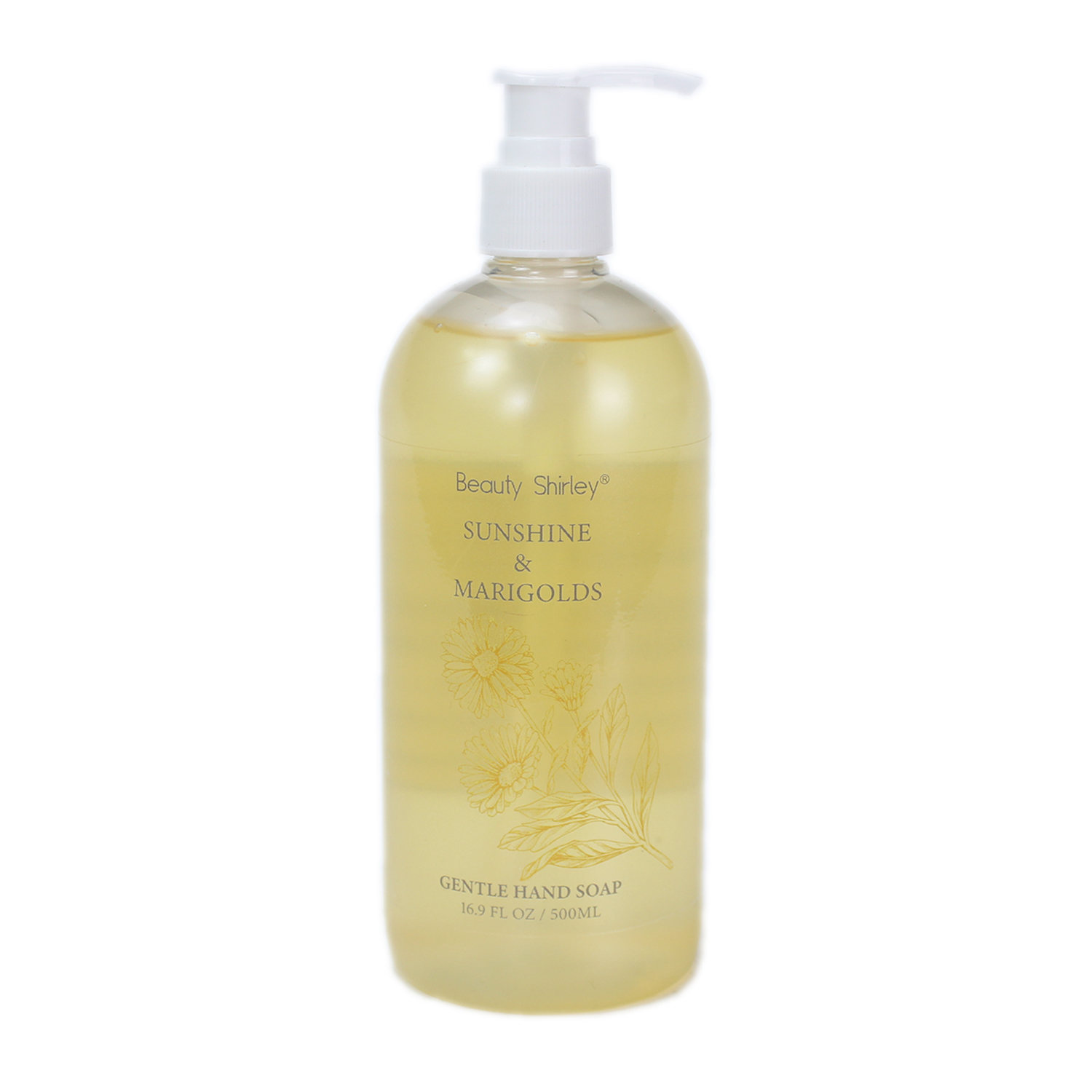
Selecting the right container material dictates chemical stability. Surfactants found in liquid soaps can degrade inferior materials. You must match the plastic to your specific formulation.
HDPE (High-Density Polyethylene): Industry professionals consider HDPE the ultimate workhorse. It appears opaque or semi-translucent. It boasts phenomenal resistance to harsh surfactants. It rarely suffers from stress-cracking, even after months of warehouse storage. Its slightly flexible nature absorbs transit impacts beautifully.
PET (Polyethylene Terephthalate): Brands choose PET for its striking, glass-like clarity. It showcases vibrant, colored soap formulations perfectly. However, it requires a trade-off. PET feels notably more rigid than HDPE. Under extreme impact or freezing temperatures, PET bottles can shatter. You must pack them carefully in robust corrugated boxes.
Glass & Aluminum (The Skeptic’s View): Premium brands love pushing glass and aluminum for their eco-appeal. Yet, the realities of bulk freight are brutal. Glass shatters easily. It dramatically increases your overall shipping weight. Aluminum poses a hidden chemical danger. Soap formulas can react with raw metal. You must require specialized internal epoxy coatings to prevent your formula from turning black or degrading.
Material | Durability Profile | Visual Clarity | Freight Impact | Ideal Use Case |
|---|---|---|---|---|
HDPE | High impact resistance, crack-proof | Opaque / Frosted | Lightweight, easy to stack | Bulk gallons, commercial refills |
PET | Moderate, can crack if frozen | High transparency | Lightweight, requires padding | Retail-ready 500ml bottles |
Glass | Low, highly prone to shattering | Premium transparency | Heavy, expensive DIM weight | Luxury boutiques, small batches |
Aluminum | High, prone to denting | Opaque metallic | Moderate weight | Eco-refill programs (with coating) |
Understanding these material limits helps you refine your liquid soap packaging strategy. Always prioritize formulation compatibility over pure aesthetics.
Building a proprietary brand requires strategic design choices. When launching a private label hand wash, you must balance visual differentiation against production speed.
Custom molds offer total brand ownership. A unique bottle silhouette instantly captures consumer attention. However, custom molds carry steep costs. They demand high minimum order quantities (MOQs) and add months to your timeline. Conversely, stock packaging guarantees speed-to-market. You can elevate standard bottles using premium decorative techniques. Waterproof BOPP (Biaxially Oriented Polypropylene) labels resist bathroom humidity perfectly. Silk-screen printing prints ink directly onto the plastic, creating an expensive, permanent feel.
Do not ignore the B2B unboxing experience. Wholesale distributors judge your brand by the secondary packaging. Sturdy bottle boxes and corrugated inserts protect fragile pump mechanisms. A tightly packed, beautifully branded master carton signals high product quality before the end-user ever sees the soap.
Compliance realities dictate label design space. The FDA enforces strict cosmetic labeling rules. You must allocate adequate real estate for full ingredient lists. Volume declarations must appear clearly in fluid ounces and milliliters. Your design must also leave room for legally required batch coding.
Best Practice: Always test label adhesion on actual filled bottles. Soaps can subtly expand plastic, causing cheap paper labels to wrinkle or peel off.
Your business depends on reliable manufacturing partners. Vetting a potential hand soap supplier requires looking past their glossy catalogs. You must demand hard proof of their logistics competency.
A trustworthy supplier will provide documented transit testing proof. Ask for their ISTA (International Safe Transit Association) testing data. Do they perform rigorous drop tests? Can they show vibration testing results simulating a long-haul truck ride? Do they conduct vacuum leak testing to mimic high-altitude freight? If they cannot produce this data, you carry the risk.
Discuss MOQs and lead times transparently. Ask how custom packaging choices shift their baselines. Stock white or clear bulk jugs might require an MOQ of just one pallet. Transitioning to custom-matched pantone bottles might jump the MOQ to 10,000 units. You need this breakdown to manage cash flow accurately.
Examine their specific Quality Assurance (QA) protocols on the assembly line. The best manufacturers utilize induction sealing on bulk jugs. This process uses an electromagnetic field to fuse a foil liner directly across the bottle lip. It guarantees leak-proof freight. It also provides tamper-evident security. If a supplier only relies on screw-on caps without foil seals, walk away.
Common Mistake: Failing to specify neck-finish torque. If the capping machine applies caps too loosely, bottles leak. If applied too tightly, the threads strip. Ask your supplier how they monitor application torque during production.
Selecting the optimal container demands strategic thinking. The "best" packaging is strictly dictated by your distribution model. A commercial refill operation thrives on high-capacity HDPE jugs or space-saving bag-in-box systems. A retail shelf strategy relies on clear, durable 500ml PET bottles equipped with lock-down pumps.
Take actionable steps before finalizing any contract. Advise your purchasing team to request physical packaging samples. Fill those samples with your exact formula. Perform a landed-cost calculation factoring in the DIM weight of the packed master carton. Running these precise numbers guarantees your bulk purchase drives maximum profitability without sacrificing product safety.
A: Square 1-gallon HDPE jugs typically offer the lowest cost-per-ounce. They keep manufacturing costs low and allow for highly optimized pallet stacking. This shape eliminates wasted space during freight transit, significantly reducing your shipping expenses per unit.
A: Specify "lock-down" or "twist-to-lock" dispenser pumps. Insist on protective saddle clips under the actuator. Ensure your supplier monitors appropriate neck-finish torque during capping. Finally, demand induction foil seals for transit to create a completely leak-proof barrier.
A: High concentrations of certain essential oils (like citrus, pine, or clove) can aggressively degrade specific plastics over time. This causes paneling or cracking. Always require rigorous chemical compatibility testing (stability testing) from your manufacturer before committing to a container.
A: Stock packaging typically starts at 1,000 to 2,500 units, making it accessible for new brands. However, if you require custom bottle molds or unique plastic colors, manufacturers typically demand 10,000+ units to cover the tooling and setup costs.


