Views: 0 Author: Site Editor Publish Time: 2026-09-07 Origin: Site
Toner vs essence is less about a fixed formula rule and more about how a product is positioned, formulated, and used in a skincare routine.
Toners are often lighter post-cleanse liquids, while essences are often positioned as lightweight hydration or treatment-adjacent steps. But the categories overlap heavily: a hydrating toner can resemble a light essence, and an essence does not automatically contain more actives. The finished formula and directions matter more than the name alone.
Toner and essence are two of the most easily confused leave-on skincare categories. Both can be lightweight, water-rich, hydrating, and used early in a routine. That overlap is exactly why searches for toner vs essence, essence vs toner, and toner before or after essence often produce conflicting answers.
The cleanest way to compare them is not to assume that every toner is watery and every essence is richer. Instead, look at the finished product: texture, ingredient system, directions, intended benefit, and where the brand positions it in the routine.
| Comparison point | Toner | Essence |
|---|---|---|
| Typical routine role | Often used immediately after cleansing as a light leave-on step. | Often used as a lightweight hydration or treatment-adjacent step before heavier products. |
| Typical texture | Frequently thin and fluid, but can also be more viscous. | Frequently fluid to lightly viscous, but some are as thin as toners. |
| Ingredient profile | May include humectants, soothing ingredients, exfoliating acids, botanical extracts, or other cosmetic ingredients. | May include humectants, ferments, niacinamide, peptides, botanical extracts, or other cosmetic ingredients. |
| Does it have more actives? | Not automatically less. | Not automatically more. |
| Do you need it? | Optional unless it adds something useful to your routine. | Optional unless it adds something useful to your routine. |
| Main overlap | Hydrating toners can look and feel very similar to light essences. | Light essences can look and feel very similar to hydrating toners. |
This overlap is the most important point in the entire comparison. Product names give you a useful clue about positioning, but they do not tell you the complete formula.
Modern toners cover a wide range of functions. Some are simple hydrating liquids. Others are positioned around soothing, exfoliation, oil control, brightening, or another cosmetic benefit. That makes the old idea that “toner means astringent” too narrow for the current market.
Often built around humectants and skin-conditioning ingredients, with a fluid texture that fits early in a routine.
May contain exfoliating acids, niacinamide, botanical extracts, or other ingredients selected for a specific cosmetic positioning.
Because the category is broad, it is more accurate to ask what a specific toner is formulated to do than to assume that every toner “balances pH,” removes leftover cleanser, or prepares skin for better absorption. Those claims depend on the finished formula and supporting evidence.
An essence is generally a lightweight leave-on product positioned between very fluid post-cleanse steps and heavier serums or moisturizers. Many essences focus on hydration and skin-conditioning benefits, while others are designed around a specific ingredient story or cosmetic goal.
What an essence is not is a guaranteed “higher-active toner.” Some essences are more ingredient-dense than some toners, but the reverse can also be true. Texture and active loading are formulation decisions, not automatic consequences of the word essence.
If you use both, toner commonly comes before essence because many toners are thinner and many essences are slightly more substantial. But that is a practical layering convention, not a universal skincare law.
When the product directions specify an order, follow them. If a toner is more viscous than an essence, or one product contains ingredients with special directions, the simple “toner first” rule may not be the best guide.
You also do not need to apply either product to deliberately damp skin unless the product directions recommend it. Patting, pressing, or using a cotton pad can all be valid depending on the finished formula and packaging.
In the U.S., cosmetic labeling rules require a product identity and truthful, non-misleading labeling, but they do not set a formula percentage that makes a product a toner or an essence. That leaves meaningful flexibility in how brands position these categories, as long as the finished product is labeled appropriately and its claims remain compliant.
It usually signals a hybrid market position rather than a separate regulated formula class. The useful comparison is still the ingredient list, texture, directions, and intended cosmetic benefit—not whether the front label uses one word or both.
For U.S. market planning, brands can refer to FDA's current Cosmetics Labeling Guide for identity, ingredient, and labeling requirements.
Choose by what the formula adds, not by a blanket rule about skin type. Oily skin does not automatically require toner, and dry skin does not automatically require essence.
| If your goal is... | What to compare | Practical choice |
|---|---|---|
| A very light post-cleanse step | Fluid texture, simple directions, non-tacky finish. | A toner may fit, but a light essence can also work. |
| More lightweight hydration | Humectant system, viscosity, skin feel, and layering compatibility. | A hydrating toner or essence can both be appropriate. |
| A targeted ingredient story | Actual ingredient list, concentration where disclosed, directions, and supporting claims. | Choose the stronger finished formula, regardless of category name. |
| A shorter routine | Whether the two products duplicate hydration or ingredient functions. | Use one, or skip both if neither adds meaningful value. |
| Layering both | Different functions, compatible formulas, and a comfortable final skin feel. | Use both only when each has a clear role. |
No. There is no routine rule that requires both. If a hydrating toner and an essence deliver nearly the same texture and ingredient profile, layering both may simply repeat the same function.
Using both makes more sense when the formulas are genuinely different—for example, when one is a very light post-cleanse product and the other contributes a distinct hydration or ingredient profile. If your routine already feels comfortable and your moisturizer is doing its job, neither step is mandatory.
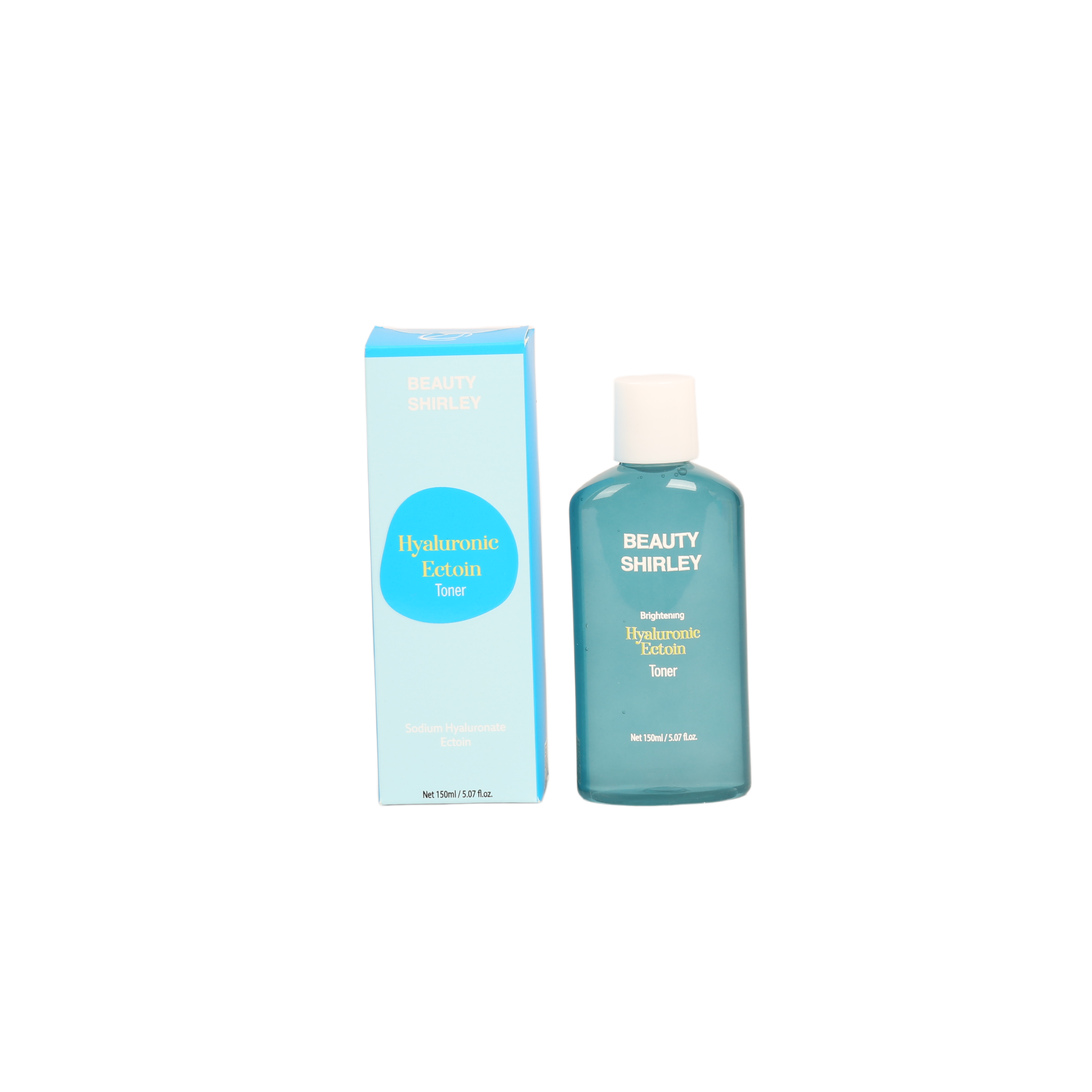
Our BLDES26012 toner is a useful example of why modern toners cannot be reduced to the old “astringent water” definition. It is a 150 ml toner built around hyaluronic acid and ectoin and presented as part of a broader hydration-focused skincare range.
At BeautyShirley, we do not treat the toner-versus-essence decision as a name change applied at the end of development. The desired user experience should be defined first, then translated into viscosity, ingredient system, packaging, directions, and claims.
Brands developing a full routine can connect the toner or essence brief with our skincare range, serum and essence category, and OEM/ODM customization service.
Sometimes the formulas can be very similar, but not always. “Toner” and “essence” are broad cosmetic market categories, so compare the texture, ingredient list, directions, and intended benefit rather than assuming the names are interchangeable.
Toner commonly comes first when it is the thinner product, followed by essence. But the specific product directions should take priority, especially if the formulas have different textures or special use instructions.
No. If the two products duplicate the same hydration or ingredient role, using one may be simpler. Layer both only when each adds something distinct and the combination feels comfortable.
Not automatically. Many essences are positioned around hydration, but a well-formulated hydrating toner can be just as hydration-focused. The humectant system, formula, and application amount matter more than the category name.
An essence and a moisturizer are different product types. Some people may prefer very light routines, but a moisturizer is generally designed to provide a more substantial emollient or occlusive layer than a lightweight essence. Follow the products that fit your skin and routine rather than treating essence as a universal replacement.
It usually indicates a hybrid positioning: a toner with an essence-like texture or ingredient story, or a product designed to cover both early routine roles. The exact meaning still comes from the finished formula and directions.
Start with the intended user experience and routine role. Then define texture, ingredient system, packaging, directions, and claims. At BeautyShirley, we develop those elements together so the product identity matches the formula rather than relying on the category name alone.
Toner vs essence is not a choice between two rigid formula classes. Toners are often lighter post-cleanse products, while essences are often positioned as lightweight hydration or treatment-adjacent steps, but the categories overlap enough that the finished formula matters more than the label.
If you use both, thinner-to-more-substantial layering is a useful starting point, not a universal law. If the products do the same job, choose one. If they contribute different textures or ingredient functions, both can fit comfortably in the same routine.
For brands, the same principle becomes a product-development decision: define the experience first, then align the formula, packaging, directions, and claims. That is how we approach toner and essence projects at BeautyShirley.