
Views: 0 Author: Site Editor Publish Time: 2026-08-07 Origin: Site
Product sizing often feels like a minor detail during initial product development. Many founders focus entirely on perfecting their ingredient profiles. However, for skincare companies, physical volume dictates unit economics. It directly influences packaging feasibility. It also drives consumer repurchase rates. Whether launching a daily moisturizer or a premium specialty cream, choosing the correct capacity matters. Selecting the right size bridges the gap between laboratory formulation and retail reality.
A container too large might spoil before the consumer finishes it. A bottle too small often causes customer frustration. This guide breaks down how to determine the optimal sizes for your private label body lotion. We will align consumer usage habits alongside supplier constraints. This strategic approach protects profit margins while ensuring an excellent user experience from the first pump to the last drop.
Usage Dictates Volume: Standard body lotions typically range from 200ml to 400ml, while travel and premium niche formulas perform better in 50ml to 100ml formats.
Viscosity Drives Packaging Constraints: Your private label body lotion specifications must match the dispenser—thick formulas require jars or wide-orifice tubes, while lightweight lotions need precision pumps.
MOQs Influence Strategy: Launching multiple sizes simultaneously splits your Minimum Order Quantities (MOQs), directly impacting upfront capital and storage.
Margin Balancing: Larger sizes offer consumers better value but require rigorous cost analysis of bulk formulation versus heavier shipping weights.
Getting your product size wrong carries severe financial consequences. Incorrect sizing disrupts the natural consumer lifecycle. If you package a daily moisturizer in a tiny 50ml tube, customers burn through it too quickly. They feel cheated. They perceive the price-per-ounce as unreasonably high. This frustration often leads to brand switching. Conversely, if you package a heavy, specialty treatment cream in a massive 500ml jug, it presents a different problem. The product will likely expire before the user finishes it. Rancid oils ruin brand trust permanently.
You must base packaging decisions on actual usage math. We can calculate the average consumption rate to find the sweet spot.
Application Volume: A standard full-body application requires roughly 15ml to 30ml of product.
Daily Usage: If a consumer applies the lotion daily, they consume between 105ml and 210ml per week.
Replacement Cycle: A standard 250ml bottle lasts a daily user approximately two to four weeks.
This replacement cycle represents the ideal window for customer retention. A monthly repurchase cadence keeps your brand relevant. It also sustains predictable revenue streams.
Sales channels also dictate your sizing strategy. Retail shelf space remains highly competitive. Brick-and-mortar stores favor standard footprints. A moderately sized 200ml bottle fits cleanly onto retail displays. It maximizes revenue per square inch of shelf space. Direct-to-Consumer (D2C) brands face an entirely different obstacle. D2C companies must account for shipping logistics. Heavy, liquid-filled containers incur high dimensional weight fees. A 500ml bottle costs significantly more to ship than a 200ml tube. You must factor these shipping expenses into your final retail price. Balancing these channel-specific realities ensures long-term profitability.
Brands typically segment body lotions into three distinct size tiers. Each category serves a specific strategic purpose. You should select the tier matching your target audience and distribution model.
Travel & Trial Sizes (30ml – 100ml)
Best for: Customer acquisition, travel sets, and highly active ingredients.
Considerations: These sizes carry the highest cost-per-ounce to manufacture. The packaging often costs more than the formulation inside. However, they reduce the barrier to entry for hesitant buyers. They also work exceptionally well for upselling custom private label body lotion bundles. Brands often use 50ml sizes in holiday gift sets or subscription boxes.
Standard Retail Sizes (150ml – 250ml)
Best for: Premium brands, targeted treatments, and first-time full-size purchases.
Considerations: This range represents the industry sweet spot. It perfectly balances healthy profit margins alongside consumer price tolerance. A 200ml size feels substantial enough to justify a premium price tag. It also remains light enough to keep D2C shipping costs reasonable. Targeted treatments, like firming lotions or AHA body exfoliants, thrive in this category.
Value & Family Sizes (400ml – 500ml+)
Best for: Daily basic moisturizers, family-oriented brands, and high-frequency use.
Considerations: Bulk sizes demand durable packaging. You must invest in high-quality pump mechanisms. A broken pump on a 500ml bottle ruins the user experience entirely. Value sizes yield a lower profit margin per ounce. However, they drive higher overall cart values. They also build strong, long-term brand loyalty within households.
Below is a summary chart comparing these standard categories.
Size Category | Volume Range | Primary Use Case | Margin Impact |
|---|---|---|---|
Travel / Trial | 30ml – 100ml | Discovery, Gift Sets, Active Treatments | High packaging cost, excellent for acquisition |
Standard Retail | 150ml – 250ml | Premium Formulas, First-time Purchases | Optimal balance of profit and shipping weight |
Value / Family | 400ml – 500ml+ | Daily Hydration, Shared Household Use | Lower margin per ounce, higher total cart value |
Formulation physics directly restrict your packaging choices. You cannot put a thick body butter into a narrow pump bottle. The product will not dispense. You must understand the technical relationship between your lotion's thickness and your chosen container.
Chemists measure viscosity in centipoise (cP). A lightweight, watery lotion might measure around 10,000 cP. A heavy, rich body cream can exceed 100,000 cP. Your packaging must accommodate this specific measurement.
Pump bottles dominate the 250ml+ size categories. They offer convenience and hygiene. Consumers love them for daily use. However, the pump mechanism must match the specific lotion viscosity. If you use a narrow dip tube for a thick formula, the pump will clog. The consumer will struggle to extract the product. Always request pump mechanisms rated for high-viscosity liquids if your formula exceeds 30,000 cP. Additionally, test the spring strength. Weak springs fail to retract after dispensing thick formulas.
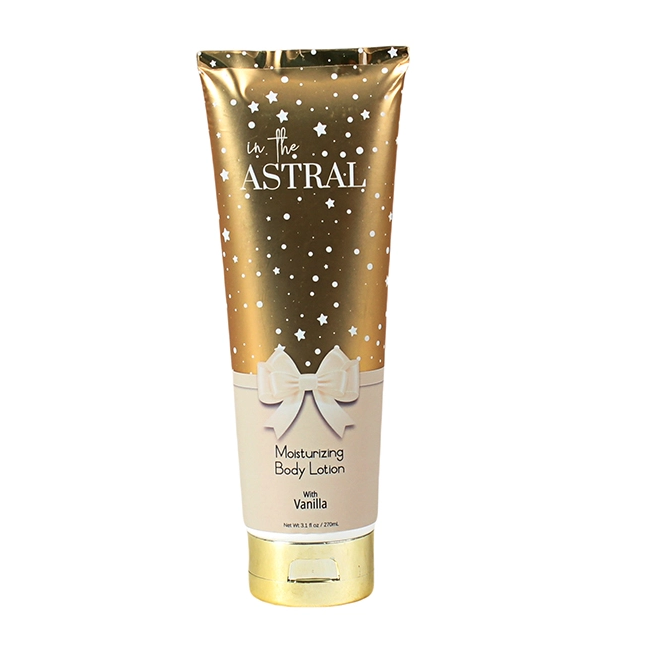
Squeeze tubes provide the ideal housing for 100ml to 200ml sizes. They offer excellent portability. They also allow consumers to cut the top off to reach the final drops. When sourcing tubes, pay close attention to the orifice size. A small orifice works beautifully for liquid gels. It creates a frustrating bottleneck for thicker creams. You must also consider material recovery. Flexible polyethylene (PE) tubes allow users to squeeze out nearly 95% of the product. Rigid plastics trap material inside, leading to negative reviews.
Some formulations simply refuse to flow. Ultra-thick variations of skincare brands private label body lotion must default to wide-mouth jars. This rule applies regardless of the chosen volume. A heavy shea butter cream exceeding 100,000 cP requires a jar. Jars introduce different challenges, primarily concerning preservation. Consumers dip their fingers directly into the product. This action introduces bacteria. If you package your product in a jar, you must ensure your preservative system can handle repeated microbial exposure. Wide-mouth jars also increase the surface area exposed to oxygen. This exposure accelerates the degradation of active ingredients.
Selecting a size is only half the battle. You must then navigate the complex world of manufacturing constraints. Minimum Order Quantities (MOQs) represent the biggest hurdle for emerging brands. Many founders misunderstand how MOQs actually work in cosmetics.
Suppliers often enforce separate MOQs for packaging and formulation. Manufacturers measure formulation MOQs in kilograms. They measure packaging MOQs in units. Let us examine a common scenario. A manufacturer might require a 500kg minimum batch for mixing the formula. If you choose a 250ml bottle, this 500kg batch yields roughly 2,000 units. This volume feels manageable for a pilot launch.
However, if you choose a 50ml travel tube, that same 500kg batch yields 10,000 units. You suddenly have massive inventory tied up in travel sizes. Launching multiple sizes simultaneously compounds this problem. You split your capital. You increase your storage requirements. Start with one strategic size to validate market demand before expanding your lineup.
Avoid the hidden costs of highly customized bottle shapes. Custom molds require significant upfront tooling expenses. They also extend lead times drastically. For initial launches, always use stock packaging. You can achieve a premium look using custom screen printing, textured labels, or unique color applications. Validate your market fit first. Save custom molds for your phase-two expansion.
Stability testing presents another hidden risk when changing sizes. The surface-area-to-volume ratio changes depending on the container. A formula might remain perfectly stable in a large 400ml PET bottle. That exact same formula might separate or leach plasticizers when squeezed into a tiny 30ml PE tube. Always verify stability and preservative efficacy for every single size variation. Never assume universal compatibility.
Your manufacturing partner makes or breaks your launch timeline. You need a supplier capable of handling your specific size requirements efficiently. Follow this framework to evaluate potential partners.
Begin by auditing supplier capabilities. Ask direct questions about their filling line constraints. Not all machines can fill all sizes. You should ask:
What is your maximum and minimum fill volume?
Can your equipment handle high-viscosity hot-pours for jars?
Do you have automated tube-sealing capabilities, or is it done manually?
Next, request turnkey solutions. The best suppliers offer pre-vetted packaging paired alongside stable formulas. This approach bypasses months of costly compatibility testing. A turnkey partner knows exactly which pump works flawlessly alongside their house formula. They eliminate the guesswork. This reliability saves you time and protects your brand reputation.
Finally, build a scalability framework. Do not launch five sizes on day one. Start with a core hero size. A 200ml bottle generally serves as the safest starting point. Define strict sales thresholds for future expansion. For example, decide you will only introduce a 50ml travel size after selling 5,000 units of the hero product. This disciplined approach preserves your cash flow.
Use the following chart framework to evaluate your shortlisted partners.
Evaluation Criteria | Ideal Supplier Response | Red Flag Response |
|---|---|---|
Filling Capabilities | Automated lines supporting 30ml to 1000ml | Manual filling only, limited to one bottle type |
Packaging Options | Extensive library of pre-tested stock packaging | Forces you to source your own unverified packaging |
MOQ Flexibility | Willing to split a 500kg batch across two stock sizes | Rigid 10,000 unit minimums per SKU regardless of weight |
Product sizing represents a highly strategic calculation. It seamlessly combines user experience, formulation physics, and unit economics. Choosing the right volume ensures your consumers enjoy the product fully before it expires. It also guarantees they receive enough product to form a lasting daily habit.
Always prioritize credibility when selecting manufacturing partners. Reliable suppliers will actively guide brands away from incompatible size and packaging pairings. They act as consultants, rather than just order-takers. If a manufacturer agrees to put a heavy body butter into a narrow pump bottle without warning you, find a new partner.
Take immediate action today. Contact your shortlisted manufacturing partners. Request comprehensive sample kits. Ask for detailed MOQ breakdowns across different packaging sizes. Run accurate margin projections using these hard numbers. This diligent preparation guarantees a profitable and scalable product launch.
A: The 200ml to 250ml range is the most popular starting point. This size perfectly balances perceived consumer value alongside cost-effective shipping weights. It provides enough product for a month of daily use, establishing a reliable repurchase cycle.
A: Often the opposite is true. Suppliers usually have higher unit MOQs for smaller sizes. They must meet their minimum batch weight for the large mixing tanks. A 500kg batch yields far more 50ml tubes than 250ml bottles.
A: Yes, provided the viscosity allows it. The formula must remain fluid enough to clear the pump mechanism easily. However, it must also be stable enough not to leak uncontrollably from the tube orifice. Always verify compatibility with your private label body lotion supplier.
A: Custom molds usually add four to eight weeks to your production timeline. This delay occurs before formulation even begins. Utilizing a manufacturer's existing stock library speeds up your launch significantly while reducing initial capital expenditure.


