
Views: 0 Author: Site Editor Publish Time: 2026-09-10 Origin: Site
The retail landscape moves incredibly fast today. Essential oil gift sets consistently drive high demand and strong margins. They perform exceptionally well during holiday seasons and seasonal purchasing cycles. Consumers actively seek these wellness products for gifting.
Unfortunately, the market remains flooded by low-grade options. Many manufacturers use synthetic fragrances instead of pure botanical extracts. Sourcing poor-quality sets creates massive risks for your retail business. It leads to quick customer churn and severe brand damage. You also face nightmare return logistics due to leaking bottles or allergic reactions.
You need a clear, operational framework to evaluate manufacturers properly. We will show you how to ensure strict compliance across your supply chain. You will learn to source reliable inventory safely. This guide helps you balance healthy retail margins while guaranteeing verifiable product purity.
Sourcing a reliable wholesale essential oil gift set requires strict vetting of a supplier's GC/MS (Gas Chromatography/Mass Spectrometry) testing and compliance documentation.
Choosing between white-label, private-label, and standard bulk purchasing depends heavily on your brand's required speed-to-market and target profit margins.
Packaging integrity—specifically UV-resistant glass and leak-proof caps—is the most critical factor in preventing inventory shrinkage before the product reaches the retail shelf.
Successful baseline sets rely on proven, high-demand scent profiles (e.g., Lavender, Peppermint, Tea Tree) rather than obscure blends.
Retailers face a tough challenge today. They simply cannot afford to guess which products will sell. A strong retail offering must balance aesthetic shelf-appeal alongside recognizable consumer value. Shoppers need products they instantly understand and trust.
We highly recommend starting your inventory strategy using universally accepted scent combinations. Avoid obscure or highly niche blends initially. Focus on core scent profiles like relaxation, immunity, and energy. Essential oils like Lavender, Peppermint, Sweet Orange, and Tea Tree consistently move off retail shelves. These familiar profiles minimize your dead stock risk. They also appeal to both experienced users and complete beginners.
Next, you must consider perceived value. Bundling multiple oils into a thematic package drives higher revenue. A well-designed wholesale essential oil gift set increases the Average Order Value (AOV). Selling a curated "Beginner's Kit" or "Holiday Relief" collection brings much higher margins compared to selling individual bottles separately. Shoppers love ready-made gifting solutions.
Relaxation Kits: Include Lavender, Chamomile, and Ylang Ylang.
Energy Kits: Bundle Peppermint, Lemon, and Sweet Orange.
Immunity Kits: Feature Tea Tree, Eucalyptus, and Rosemary.
Focus Kits: Combine Frankincense, Bergamot, and Cedarwood.
Grouping these specific scents creates an immediate use case for the buyer. It removes purchasing friction. Customers do not have to research which oils blend well together. You do the thinking for them, and they reward you through immediate purchases.
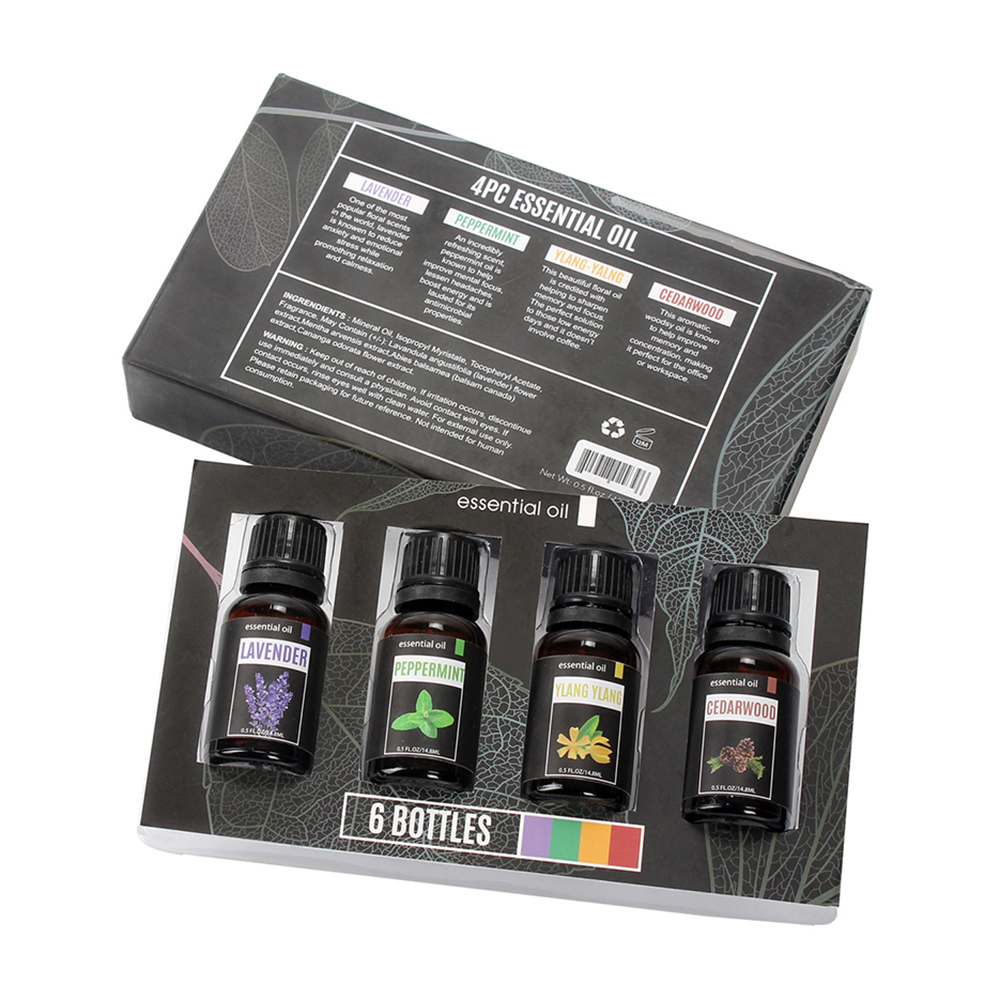
Choosing the right sourcing pathway defines your brand timeline. You must weigh speed-to-market against long-term profit margins. Different retail models require completely different supply chain strategies. Let us examine the main routes available to retail buyers today.
First, consider building a private label essential oil strategy. The pros include complete brand control and higher perceived value. You can command premium pricing because the brand identity is uniquely yours. Competitors cannot undercut your specific product. However, the cons are significant for new businesses. You face much higher Minimum Order Quantities (MOQs). You also endure longer lead times for custom label design and regulatory compliance reviews.
Second, look at off-the-shelf or white-label solutions. The pros are highly attractive for new entrants. You get immediate inventory availability and proven retail packaging. This provides a low entry threshold for boutique testing. You can test the market fast. The main con involves market saturation. You often end up competing on price against other retailers selling the exact same brand.
How do you decide between these options? Use cost-to-outcome logic. Start by purchasing a ready-made bulk aromatherapy set to test actual market demand. Track your sell-through rates carefully over one quarter. Once your sales volume stabilizes, transition your capital into a custom private label line. This staged approach severely limits your initial financial exposure while scaling profits eventually.
Feature | Private Label | White Label / Bulk Turnkey |
|---|---|---|
Brand Control | High (100% Custom) | Low (Standardized) |
Speed to Market | Slow (8-12 weeks) | Fast (1-2 weeks) |
Profit Margins | High | Moderate to Low |
Initial Investment | High (Due to MOQs) | Low (Flexible ordering) |
Packaging serves as your first line of defense. It prevents expensive inventory shrinkage and ensures maximum shelf life. You absolutely cannot compromise on material science when sourcing botanicals.
When you house a 15ml essential oil, you must demand amber, cobalt, or frosted UV-resistant glass. Pure botanical extracts contain highly volatile organic compounds. Plastics will quickly degrade upon contact. They leach toxic chemicals directly into the pure oil. This reaction destroys the product completely. It also exposes your retail business to severe liability risks if customers use contaminated oils.
The standard for a glass bottle essential oil goes far beyond visual aesthetics. Glass represents a strict chemical necessity. Light and heat degrade pure oils rapidly. Dark glass protects the delicate botanical integrity from harmful UV exposure. Never accept clear glass bottles unless they feature heavy UV-blocking coatings.
You must also address the leakage threat head-on. Loose caps create the most common retail complaint worldwide: ruined, oil-soaked gift boxes. Real-world logistics involve incredibly rough transit handling.
You must vet suppliers heavily on their closure systems. Ask them for certified drop-testing results. Verify the tight fit of their orifice reducers (the small plastic drop dispenser inside the neck). Demand tamper-evident seals on every single bottle. A leaking bottle ruins the entire retail display box long before it hits your shelf. It wastes money and angers customers instantly.
Failing to test closure tightness after extreme temperature changes during shipping.
Accepting thin cardboard inserts instead of high-density EVA foam for gift boxes.
Using labels without oil-resistant lamination, causing ink to smear easily.
Never take any supplier's word for "100% pure." The aromatherapy industry suffers from rampant adulteration. Suppliers often dilute expensive oils using cheaper carrier oils or synthetic fragrance chemicals. You must rely purely on evidence-oriented vetting.
Smart buyers demand specific documentation before signing any purchase order. These documents prove authenticity and ensure legal compliance.
GC/MS Reports: Gas Chromatography and Mass Spectrometry testing provides batch-specific proof of purity. It shows the exact chemical breakdown of the oil. This report proves the complete absence of synthetic adulterants.
Safety Data Sheets (SDS): You absolutely need these for warehouse storage. Freight carriers also require SDS for retail shipping compliance, as essential oils classify as flammable liquids.
Certificates of Analysis (COA): This document confirms the precise botanical origin. It lists the exact extraction methods used, ensuring you receive true steam-distilled or cold-pressed products.
Labeling compliance represents another massive hurdle. Note the severe legal risks of making non-compliant claims. You cannot make medical claims on retail packaging. Never state an oil "cures" insomnia or "treats" anxiety. Instead, follow strict cosmetic and aromatherapy usage guidelines. Use terms like "promotes restful sleep" or "encourages a calming environment." Regulatory bodies will fine retailers heavily for improper medical labeling.
Moving from research to procurement requires a disciplined approach. Do not rush into bulk orders blindly. Use a structured supplier shortlisting framework to mitigate your risks.
Instruct your buying team to order physical samples first. Sample auditing separates reliable partners from poor manufacturers. When the samples arrive, evaluate them ruthlessly. Check the packaging durability during simulated transit. Look closely at the label print quality for any blurring. Test the scent accuracy immediately. Pure oils should never possess a harsh, chemical after-smell. Finally, inspect the box insert quality. The foam or cardboard must hold the bottles securely upside down.
Quality products mean nothing if they arrive three months late. You must evaluate their logistical capabilities thoroughly.
Assess their domestic versus international shipping lead times clearly.
Clarify their exact return policies regarding defective or leaked inventory upon arrival.
Negotiate tiered pricing structures based on your seasonal volume projections.
Establish clear communication channels early. Ask how they handle sudden spikes in holiday demand. A reliable vendor will provide transparent production schedules. They will also alert you to potential raw material shortages before they impact your retail shelves.
Sourcing profitable inventory remains an exercise in continuous risk mitigation. Beautiful exterior packaging means nothing if the actual extract is synthetic or the closures leak during transit. You must prioritize verifiable purity and structural integrity above all else.
Take immediate action today. Document your strict non-negotiables, including MOQ limits, packaging materials, and organic certification needs. Reach out to three vetted suppliers this week. Request your first batch of physical samples alongside their latest GC/MS reports. Building a rigorous vetting process now guarantees higher margins and loyal customers later.
A: Realistic industry baselines typically range from 500 to 1000 units for fully customized private label sets. However, standard wholesale or white-label options often offer much lower entry points, sometimes starting at just 50 to 100 units per order.
A: The 10ml to 15ml range serves as the undisputed industry standard. This size offers excellent perceived value for consumers. It provides enough volume for extended usage while keeping the final retail price point highly attractive for impulse gifting.
A: Practical timelines range from 1 to 3 years. This depends heavily on the specific botanical family and storage conditions. Citrus oils degrade faster, usually within a year. Woody or resinous oils like Frankincense can last three years if kept in dark glass away from heat.
A: Yes, you should secure general product liability insurance. Selling any topical or aromatic product carries inherent risks of customer allergic reactions or sensitivities. Standard retail liability coverage generally protects your business against these specific consumer claims.


